
Quick answer: Regular dusting, prompt stain treatment, and avoiding excess moisture are the most effective ways to extend the life of your window treatments. The right care routine depends on the material—wood blinds, fabric shades, and motorized treatments each have specific needs, but most maintenance takes just a few minutes and requires no special equipment.
Window treatments take a beating. UV exposure, dust buildup, humidity fluctuations, and daily handling add up over time—and what looked sharp and functional on installation day can start showing its age faster than it should if care is neglected.
The good news is that most window treatments are built to last. Blinds, shades, shutters, and drapery panels can all hold up for years—sometimes decades—with the right maintenance routine. At Blind Brothers Arizona, we see it regularly: a well-maintained set of cellular shades or wood blinds outlasts a poorly cared-for set by a wide margin, even when both started with the same quality product.
This guide covers practical care and maintenance tips for the most common window treatment types, so you can protect your investment and keep your windows looking their best.
Why Does Window Treatment Maintenance Actually Matter?
Neglected window treatments don’t just look worn—they stop working properly. Dust-clogged slats on aluminum blinds become harder to tilt. Fabric shades with untreated stains can develop permanent discoloration. Wood blinds exposed to sustained moisture can warp, preventing them from closing evenly.
Beyond aesthetics and function, there’s a financial case for maintenance. Quality window treatments represent a meaningful upfront investment, and replacing them prematurely is an avoidable cost. A consistent care routine—one that takes a few minutes a week—can add years to the life of nearly any window covering.
How Do You Clean and Maintain Wood Blinds?
Wood blinds are among the most elegant and durable window treatment options, but they require specific care to avoid damage.
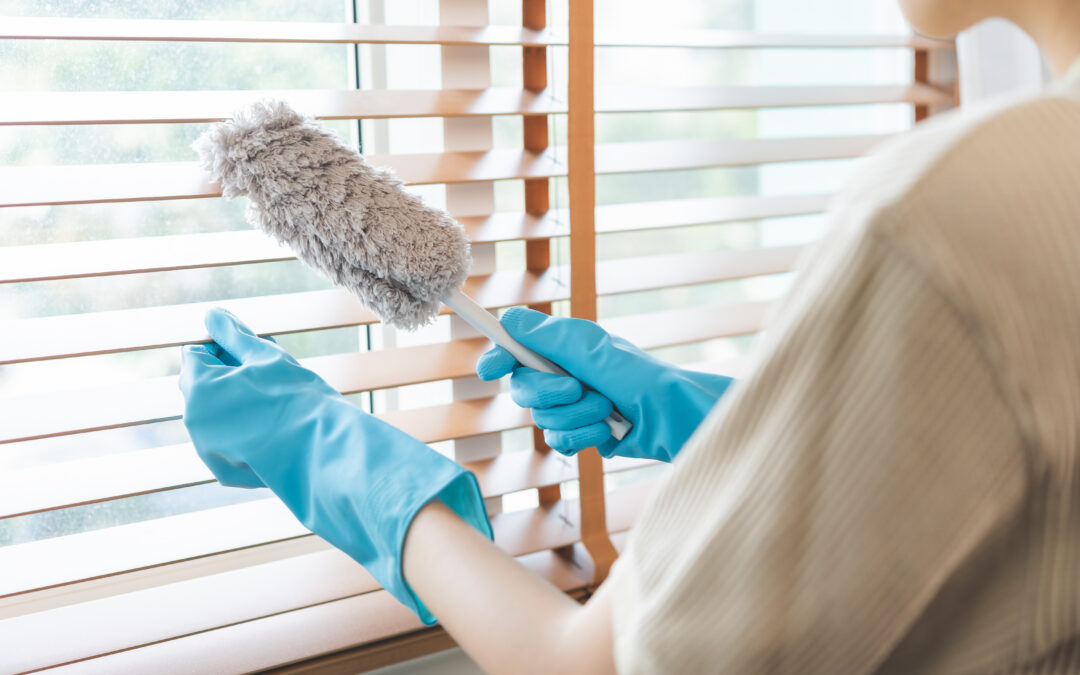
Dust frequently. Use a dry microfiber cloth, a feather duster, or a vacuum with a brush attachment to remove dust from each slat. Work from top to bottom with the slats tilted closed in one direction, then repeat in the opposite direction. This should be done at least once a week in dusty environments like Arizona homes.
Avoid moisture. Wood and water don’t mix. Never use wet cloths or spray cleaners directly on wood blinds. For stubborn spots, slightly dampen a cloth and dry the area immediately afterward. Keep wood blinds away from high-humidity areas like bathrooms and kitchens—faux wood or aluminum are better choices for those spaces.
Protect from prolonged sun exposure. Arizona’s sun is intense, and direct UV exposure can fade and dry out natural wood over time. Use UV-blocking window film on the glass itself, or pair wood blinds with a sheer panel to filter light before it reaches the slats.
What’s the Best Way to Care for Fabric Shades?
Roller shades, cellular shades, and Roman shades share some common care needs, with a few material-specific differences.
Dust regularly with a soft brush or vacuum. For cellular (honeycomb) shades, a vacuum on a low setting with a brush attachment is particularly effective at removing dust from inside the cells where a cloth can’t reach.
Spot-clean stains promptly. The faster you address a stain, the easier it is to remove. Blot—don’t rub—the affected area with a clean, damp cloth and a small amount of mild dish soap. Rubbing can spread the stain or damage the fabric weave. Rinse by blotting with a clean damp cloth and allow to air dry fully before raising the shade.
Avoid machine washing. Most fabric shades are not designed to be removed and washed. Check the manufacturer’s care tag before attempting any wet cleaning. For Roman shades with removable fabric covers, some panels can be hand-washed in cool water, but always verify first.
Address moisture damage quickly. If a fabric shade gets wet—from an open window during rain, for example—lower it fully and allow it to air dry in the open position before rolling or folding it. Trapping moisture inside a rolled shade can cause mildew.
How Should You Maintain Faux Wood and Aluminum Blinds?
Faux wood and aluminum blinds are among the lowest-maintenance window treatments available, which is part of their appeal.
Wipe down with a damp cloth. Unlike real wood, faux wood and aluminum can handle light moisture. A damp microfiber cloth removes dust and grime quickly. For aluminum blinds, close the slats and wipe one direction, then reverse and wipe the other.
Deep clean periodically. Every few months, take aluminum blinds down and wash them in a bathtub with warm water and mild soap. Rinse thoroughly and hang them up slightly open to dry before rehanging. Faux wood blinds can be wiped down in place with a slightly damp cloth—no need to remove them.
Check the tilt mechanism. Over time, the tilt rod inside the headrail can accumulate dust or wear down, making it harder to angle the slats. If slats become difficult to adjust, inspect the mechanism and contact a professional if the issue persists.
How Do You Care for Motorized Shades and Smart Window Treatments?
Motorized window treatments have specific maintenance considerations beyond cleaning.
Keep the motor track clear of dust. Dust buildup in the headrail can eventually interfere with the motor’s movement. A quick wipe-down of the headrail and track every few months helps prevent this.
Check battery levels or wired connections regularly. Battery-powered motorized shades will slow down before they stop working entirely—an early sign that batteries need replacing. Rechargeable systems should be charged according to the manufacturer’s schedule, typically every few months depending on use frequency.
Test the full range of motion periodically. Run the shade through a full open-and-close cycle every few weeks to ensure it’s operating smoothly. If you notice hesitation, unusual noise, or incomplete travel, address it early before a minor issue becomes a motor replacement.
Update software and integrations. If your motorized shades connect to a smart home system like Amazon Alexa, Google Home, or Apple HomeKit, keep the associated apps and firmware updated. Software updates often include performance improvements and bug fixes that keep your automation running reliably.
What Are the Best Practices for Maintaining Outdoor and Solar Shades?
Solar shades and outdoor shades face harsher conditions than interior window treatments, so maintenance becomes even more important.
Rinse regularly. Outdoor shades accumulate pollen, dust, and grime quickly. A light rinse with a garden hose every few weeks prevents buildup from becoming embedded in the mesh fabric.
Clean with mild soap for deeper cleaning. Apply a solution of mild soap and water with a soft brush, scrub gently, and rinse thoroughly. Avoid harsh chemical cleaners that can degrade the UV-protective coating on the fabric.
Retract during severe weather. Roll outdoor shades up before high winds or storms. Leaving them extended in strong wind can stress the fabric, the mechanism, and the mounting hardware—causing damage that’s entirely preventable.
When Should You Call a Professional for Window Treatment Repairs?
Some issues are beyond DIY fixes. If cords become frayed or tangled, mechanisms jam, slats break, or motorized components malfunction, it’s worth calling a professional rather than attempting a repair that could cause further damage.
Blind Brothers Arizona offers repair and maintenance services alongside installation. If a treatment that’s been well cared for starts showing mechanical issues, a professional assessment can often extend its life significantly—and at far less cost than full replacement.
Keep Your Window Treatments Working for the Long Haul
Good window treatments are worth protecting. A consistent routine—weekly dusting, prompt stain treatment, moisture management, and periodic mechanism checks—goes a long way toward keeping blinds, shades, and shutters functioning and looking great for years.
If you’re unsure about the best care approach for your specific treatments, or if you’re dealing with damage that needs professional attention, Blind Brothers Arizona is here to help. Contact us to schedule a consultation or service appointment, and we’ll make sure your window treatments are set up for the long term.
Frequently Asked Questions
How often should I clean my window treatments?
Dust most window treatments at least once a week, especially in Arizona’s dry, dusty climate. Deep cleaning frequency depends on the material—aluminum and faux wood blinds benefit from a thorough wipe-down every one to three months, while fabric shades should be spot-cleaned as needed and vacuumed monthly.
Can I use household cleaning sprays on my blinds or shades?
Avoid using multi-surface sprays or harsh chemical cleaners on window treatments. Most manufacturers recommend mild dish soap diluted in water for any wet cleaning. Harsh chemicals can strip finishes, degrade fabrics, and damage UV-protective coatings on solar shades.
How do I prevent my wood blinds from warping in Arizona’s heat?
Keep wood blinds away from prolonged direct sunlight and high-humidity areas. Never use wet cloths on wood slats. If your home gets very hot during summer, pairing wood blinds with a solar shade on the same window reduces the UV load and heat exposure reaching the wood.
How long should quality window treatments last with proper care?
With regular maintenance, quality window treatments can last anywhere from 7 to 20 years depending on the material and usage. Wood shutters and high-quality cellular shades tend to have the longest lifespans. Motorized components typically last 10 or more years with proper use and maintenance.
What should I do if my motorized shades stop responding to my smart home system?
Start by checking the app and firmware for updates, then reboot your smart home hub and the shade’s motor. If the issue persists, check the battery level or power connection. For persistent problems, contact a window treatment professional rather than attempting to open or adjust the motor mechanism yourself.
Is it worth repairing old window treatments instead of replacing them?
Often, yes. Broken cords, worn tilt mechanisms, and damaged slats can frequently be repaired at a fraction of the replacement cost—especially for high-quality treatments. A professional assessment from Blind Brothers Arizona can help you determine whether repair or replacement makes more financial sense for your specific situation.